
Spray Foam Attic Insulation for Townhouses in North Richland Hills
Why North Richland Hills Townhouses Need Spray Foam
Townhouses in North Richland Hills heat up fast. The average summer temp hits 95°F. You feel every degree. Most townhouses here were built around 1989. That's an older attic. Builder-grade fiberglass batts have settled. Air leaks are common.
Spray foam does two things. It seals gaps. It adds real insulation value. A few inches of closed-cell foam can bring your attic from 140°F down to 90°F. Your AC runs less. Your electric bill drops. North Richland Hills homes average electric bills over $200 in summer. Spray foam cuts that by a significant amount.
The U.S. Department of Energy says air sealing is the first step. You can read more at Energy.gov attic insulation guide. Spray foam is the best air seal you can get.
Neighborhoods like Smithfield and Iron Horse Golf Course have many townhouses with shared walls. That shared wall doesn't help the attic. Heat from the neighbor's unit can leak into your attic space. Spray foam stops that cross-contamination.
If your attic stairs are in the garage or a hallway, spray foam works best. Pull-down stairs let hot air dump into your living space. Spray foam around the hatch seals that leak. I've seen townhouse attics with gaps you could fit a fist through. Spray foam fills every crack. It dries hard and stays put for years.
Common Insulation Problems in Older North Richland Hills Townhouses
North Richland Hills townhouses share a few problems. First is the fiberglass batts. The original insulation from 1989 is thin. It settles over time. You might have R-13 where you need R-38.
Second is poor attic ventilation. Many townhouses have a small ridge vent or just gable vents. That's not enough. Trapped moisture rots the wood decking. The U.S. Environmental Protection Agency notes that moisture leads to mold. Here's the EPA guide on attic moisture control.
Third is no radiant barrier. The roof deck radiates heat down into your attic. Spray foam with a radiant barrier face stops that. If your townhouse has brick veneer, the brick soaks up heat. That heat bleeds into the attic. Spray foam on the attic floor stops that migration.
Some townhouses have ductwork in the attic. That ductwork runs through 140°F air. Your AC loses cooled air into the attic. Spray foam the attic floor, and the ductwork stays cooler.
I worked on a townhouse near the Richland Hills border last summer. The owner said the upstairs never cooled. We sprayed the attic with closed-cell foam. The temp dropped 10 degrees in the second bedroom.
You can't fix what you can't see. That's why you need an inspection. We check for air leaks, moisture, and existing insulation R-value.
Spray Foam vs. Fiberglass Batts for Townhouse Attics
Fiberglass batts were standard in the 1980s. They're cheap. They don't work well in Texas attics. Batts leave gaps at every joist. Air moves right through them. Spray foam is a closed-cell material. It expands to fill every crack. It seals the attic floor like a lid. No air leaks. No heat gain.
The R-value of spray foam is higher per inch. One inch of closed-cell foam gives R-6.5. Fiberglass batts give R-3.5 per inch. You need less thickness to get the same insulation. For a townhouse, space matters. You might only have 12 inches of attic height. With batts, you can only get R-30. With spray foam, you can get R-38 in that same space.
Cost is higher upfront. But spray foam lasts decades. Fiberglass batts sag and settle. You'd need to replace them every 10-15 years. I tell homeowners that spray foam pays for itself in energy savings. The Agency for Healthcare Research and Quality actually has no data on insulation, but ENERGY STAR does. Learn more at ENERGY STAR's attic insulation guide.
Spray foam also reduces noise. Townhouses have shared walls. The foam dampens sound from your neighbor. Less street noise too. If you ever sell your townhouse, spray foam is a selling point. Buyers know it saves them money.
The Installation Process for North Richland Hills Townhouses
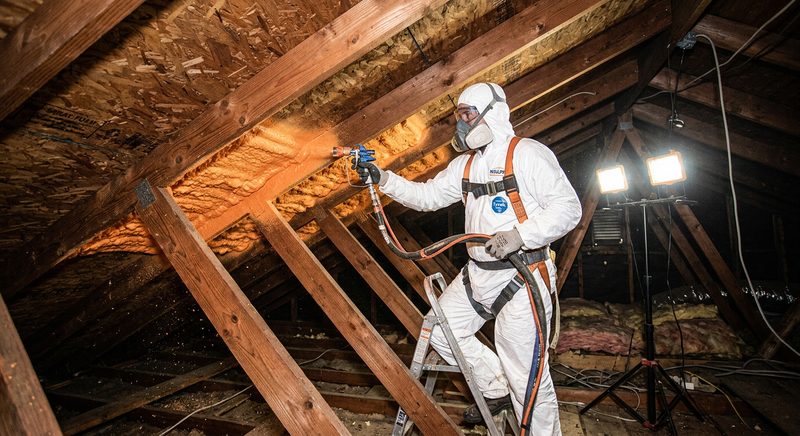
First, we inspect your attic. We look for moisture, existing insulation, and air leaks. We seal all gaps with spray foam before we add the main layer. Next, we spray foam the attic floor. We use closed-cell foam. It sticks to the plywood deck and the joists. It creates a continuous seal.
We also seal around the attic hatch. Most townhouses have a pull-down ladder. We spray foam the perimeter of the hatch frame. We might install a foam gasket too. If your attic has ducts, we spray foam around them. This seals the duct joints. It stops conditioned air from leaking out.
The whole job takes one day. We work in the morning. The foam cures in a few hours. You can walk on it by evening. We use a two-component spray foam system. It's mixed on-site. The chemicals expand to fill the space. It dries like hard plastic.
After installation, we check the R-value. We measure the foam depth. We verify it meets your insulation needs. For DFW, that's R-38 minimum. We also check the ventilation. If your attic has a ridge vent, we make sure it's not blocked. Proper ventilation keeps the roof cool and dry.
I always tell customers to watch the process. You'll see the difference. Your attic will feel sealed and solid.
Comparing Spray Foam Contractors in North Richland Hills
Several contractors serve North Richland Hills. Attic Insulation Plus and Green Attics are active here. Competitors have different methods. Some companies only install fiberglass. They don't air seal. They leave gaps. You still lose cooling.
Other companies spray foam but don't check for moisture. That's a mistake. Wet foam doesn't cure right. It can grow mold. I always do a full inspection first. I look for roof leaks. I check for condensation. I make sure the attic is dry before spraying.
We use premium-grade spray foam. It carries a warranty. The foam doesn't shrink or crack. Pricing varies. Some companies charge by the board foot. Others charge a flat fee. I give you a fixed price before we start.
I don't upsell. I don't push spray foam if your attic doesn't need it. Sometimes air sealing and blown-in cellulose work better. But for townhouses in North Richland Hills, spray foam is often the best choice. You get the highest R-value in the smallest space. You stop air leaks. You save the most money.
Energy Savings and Comfort in Your Townhouse
Your townhouse attic gets hot. That heat moves down into your living space. Your AC has to fight it. Spray foam stops that heat transfer. Your upstairs rooms stay cooler. No more hot bedroom in the afternoon.
You also save on your electric bill. North Richland Hills residents pay about 12.5 cents per kilowatt-hour. If your AC runs four hours less per day, the savings add up. A typical townhouse with poor insulation might have $200 electric bills. After spray foam, that can drop 20-30%. You save $40-60 per month.
Spray foam also helps with allergy season. It seals out dust and pollen. The air in your home stays cleaner. Your HVAC equipment lasts longer. The AC doesn't cycle as often. Less wear on the compressor.
I've seen townhouse owners cut their summer electric bills by $100 per month. That's real money. The federal government offers tax credits for energy-efficient insulation. Check current programs. The DOE tax credit page has details.
Spray foam is an investment. It pays for itself in 3-5 years. After that, it's free savings. ** ** ** ** **
How much does spray foam insulation cost for a North Richland Hills townhouse?
Does spray foam work with shared walls in a townhouse?
Can I DIY spray foam in my attic?
Will spray foam reduce my townhouse's resale value?
How long does spray foam last in a Texas attic?
Get a free estimate for spray foam in North Richland Hills
Fill out the form and we'll get back to you within 24 hours. No pressure, no upsells.
Also serving: Attic insulation service details · Attic insulation cost guide · Contact us
Nearby cities: Addison · DeSoto · DeSoto · DeSoto · Farmers Branch · All DFW locations
Last updated: 2026-05-29