Smart Thermostat vs Attic Insulation: Which Saves More?
Smart thermostat or attic insulation: which saves more in DFW? I explain the real numbers and why pairing both cuts your cooling bill by 25-35%.
The Short Answer
A smart thermostat alone saves 10-15% on cooling. Attic insulation alone saves 15-20%. But together, they save 25-35%. That's not a guess. That's from ENERGY STAR data. In DFW, where summer temps hit 96F+, the pairing matters more than either upgrade alone. I'm Neal. I run DFW Attic Insulation. Here's why you need both.
The IECC 2021 Table R402.1.2 sets the prescriptive minimum for attic insulation in Climate Zone 3 (which includes DFW) at R-38, with an equivalent U-factor of U-0.030. The International Residential Code (IRC) Section R806 requires balanced attic ventilation at a 1:300 ratio minimum.
Why Smart Thermostats Fall Short in DFW
A smart thermostat learns your schedule and adjusts temperatures. That works fine in a tight house. But most DFW attics leak like sieves. When your attic hits 140F, the cool air from your AC escapes through gaps and thin insulation. The thermostat keeps running, but the house never catches up. The U.S. Department of Energy says air sealing and insulation are the most cost-effective way to improve comfort. Without them, your smart thermostat is fighting a losing battle.
How Attic Insulation Changes the Game
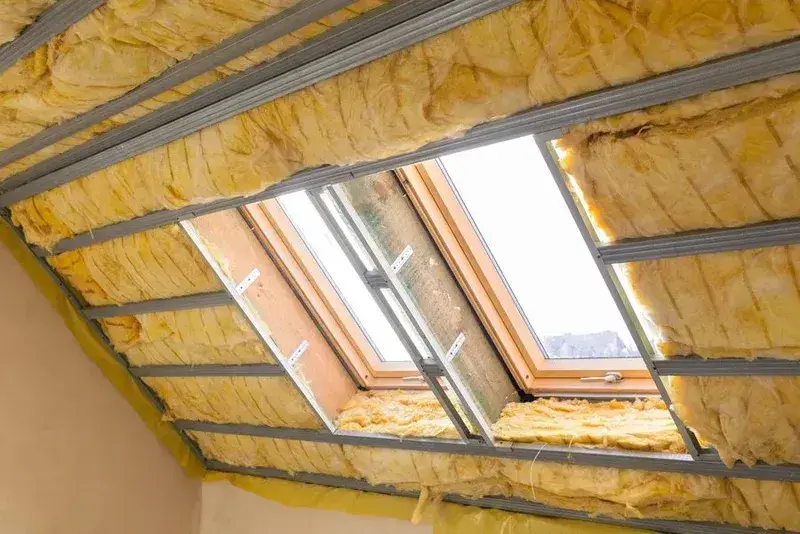
Proper attic insulation creates a thermal barrier. It keeps hot attic air out and cool indoor air in. In DFW, that means your AC runs less often and for shorter cycles. A study from the Wide Journal found that a properly insulated home responds more predictably to thermostat scheduling. That predictability is what makes a smart thermostat actually smart. Without insulation, the thermostat is guessing. With it, the thermostat works as designed.
The Real Savings: 25-35% Combined
ENERGY STAR reports that smart thermostats alone save 10-15% on heating and cooling. Attic insulation alone saves 15-20%. But when you pair them, the savings jump to 25-35%. The reason is simple: insulation lets your home hold temperature longer. The thermostat then schedules shorter, more efficient cycles. In DFW, that translates to real money. A typical home spends $2,000 a year on cooling. A 30% savings is $600 annually.
When Not to Buy a Smart Thermostat
If your attic has less than 10 inches of insulation or visible gaps around ducts and vents, don't buy a smart thermostat first. Fix the attic. I've seen homeowners spend $250 on a thermostat and still have $400 monthly electric bills. The thermostat can't fix a leaky attic. Start with attic insulation and air sealing. Then add the thermostat. You'll get the full 25-35% savings instead of just 10-15%.
What a Proper DFW Attic Looks Like
For DFW homes, I recommend R-38 to R-60 insulation. That's 12 to 20 inches of blown-in fiberglass or cellulose. The attic should also have air sealing around penetrations like recessed lights, plumbing vents, and duct boots. The U.S. Department of Energy has a zip code tool to check recommended R-values. In DFW, most homes built before 2000 have R-19 or less. That's half of what you need.
My Recommendation for DFW Homeowners
Start with an attic inspection. I'll check your current insulation depth, air leaks, and duct condition. If the attic is under-insulated, fix that first. Then install a smart thermostat. The thermostat will work better, your AC will last longer, and your bills will drop. If your attic is already well-insulated, a smart thermostat alone can still save 10-15%. But for most DFW homes, the attic is the weak link. Fix it first.
Smart Thermostat Cost vs. Attic Insulation Cost
A smart thermostat costs $130 to $250 for the device, plus $100 to $200 if you hire an electrician. Total: $230 to $450 installed. Attic insulation for a 1,500 sq ft home runs $1,500 to $2,500. The thermostat is cheaper upfront, but the savings are smaller.
Here's the math for a DFW home spending $2,000 a year on cooling: | Upgrade | Upfront Cost | Annual Savings | Payback Period | |---------|-------------|----------------|----------------| | Smart thermostat | $230-$450 | $200-$300 (10-15%) | 1-2 years | | Attic insulation to R-38 | $1,500-$2,500 | $300-$400 (15-20%) | 4-7 years | | Both combined | $1,730-$2,950 | $500-$700 (25-35%) | 3-5 years |
The thermostat pays back faster. But insulation lasts 20-30 years while thermostats need replacing every 5-10 years. Over a decade, insulation delivers more total savings.
DFW Utility Rebates for Both Upgrades
Oncor and other DFW utilities sometimes offer rebates for smart thermostats — typically $25 to $50. That barely covers shipping. But insulation rebates are more substantial. Oncor has offered $0.15 per square foot for attic insulation upgrades. On a 1,500 sq ft attic, that's $225 back.
The federal Energy Efficient Home Improvement Credit gives you 30% of insulation costs back, up to $1,200 per year. Smart thermostats qualify for up to $150 in federal tax credits. Combine the federal credit with the Oncor rebate, and your insulation upgrade gets significantly cheaper.
For comparison, HomeAdvisor reports the national average attic insulation cost at $2,100, with most homeowners paying between $1,700 and $2,500. Angi data shows DFW pricing runs $1 to $3 per square foot for standard blown-in installation, while spray foam ranges from $2 to $5 per square foot. Bob Vila's 2026 cost guide puts the national average at $2,500 for a typical attic project. These aggregator figures include contractor markups and lead-generation fees, which is why direct quotes from local specialists often run lower.
Frequently Asked Questions
Can a smart thermostat save money without attic insulation?
How much does attic insulation cost in DFW?
What R-value does DFW need for attic insulation?
Does attic insulation help in winter too?
Can I do attic insulation myself?
Ready to cut your DFW cooling bill by 25-35%? Call me, Neal, at (469) 895-2695 for a free attic inspection and estimate.
Get a free estimate
Fill out the form and we'll get back to you within 24 hours. No pressure, no upsells.
Neal runs DFW Attic Insulation, a local crew serving the entire Dallas-Fort Worth metroplex. He started in roofing and construction over two decades ago and now specializes in attic insulation, air sealing, and ventilation. He believes in honest advice — he'll tell you if you don't need anything.