Radiant Barrier vs Attic Insulation With a New Roof in DFW
Should you add a radiant barrier during a roof replacement? I explain which matters more for DFW homes and when to skip it.
The Question I Get on Every Reroof Quote
My name is Neal. I run DFW Attic Insulation. When a homeowner tells me they're getting a new roof, the first question is always the same. Should I add a radiant barrier now? Or should I just upgrade the attic insulation? I understand the confusion. Both products address heat in the attic. Both have different jobs. And a new roof is the cheapest time to install a radiant barrier because the labor goes to zero. But the answer depends on your current insulation levels. Most DFW homes built before 2015 have R-19 or less. That is not enough for this climate. ENERGY STAR recommends R-38 minimum for North Texas. If your insulation is thin, fix that first.
The IECC 2021 Table R402.1.2 sets the prescriptive minimum for attic insulation in Climate Zone 3 (which includes DFW) at R-38, with an equivalent U-factor of U-0.030. The International Residential Code (IRC) Section R806 requires balanced attic ventilation at a 1:300 ratio minimum.
What a Radiant Barrier Actually Does in a DFW Summer
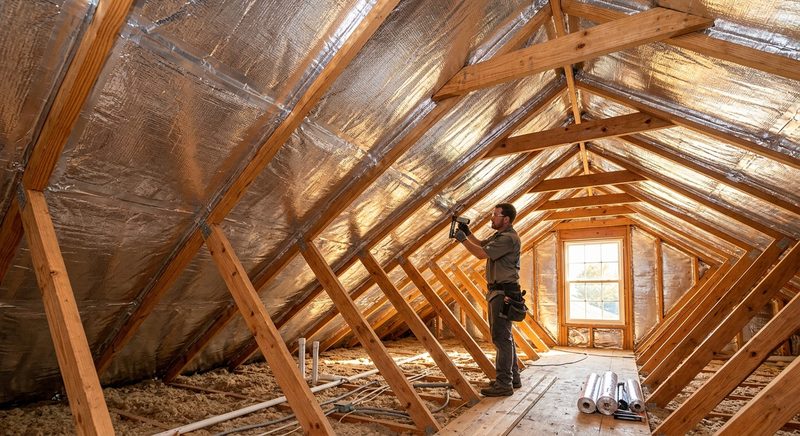
A radiant barrier is a sheet of reflective aluminum installed under the roof deck. It does not insulate. It reflects radiant heat away from the attic space. The Department of Energy says a radiant barrier can reduce attic temperatures by 25 to 40 degrees in hot climates. I have measured DFW attics at 145 degrees in July. That oven effect pushes into your living space no matter how much insulation you have. The Florida Solar Energy Center studied this exact problem. They found a radiant barrier cuts cooling costs by 8 to 12 percent. On a home with a summer electric bill of 300 dollars, that saves 24 to 36 dollars per month. But here is the catch. A radiant barrier only works if the attic is properly sealed and insulated below it.
Why Insulation Comes First in North Texas
Attic insulation is the material that slows conductive heat transfer from the attic into your home. In DFW, we have over 3,000 cooling degree days per year. That means your air conditioner runs hard from May to October. If your blown-in fiberglass or cellulose is only 6 inches deep, you are losing conditioned air through the ceiling. Adding a radiant barrier on top of R-19 insulation is like putting a sunshade on a bucket with a hole in the bottom. You see temperature drop in the attic but your home still feels warm. My rule is simple. If your attic has less than 12 inches of insulation, spend your money on adding more insulation first. Oncor offers rebates for insulation upgrades that can offset the cost.
The Right Time to Add a Radiant Barrier Is Right Now
If your insulation is already at R-38 or better, add the radiant barrier during the roof replacement. The only time radiant barrier labor is almost free is when the roof deck is exposed. Once the shingles are off, your crew can roll out the radiant barrier and staple it to the rafters in under an hour. After the new roof is installed, retrofitting a radiant barrier costs 1,000 to 1,500 dollars more because of labor and access issues. I have seen too many homeowners wait until the next summer to call me. They end up paying the higher price. If your attic insulation is adequate and you are already approved for a roof, the decision is easy. The 8 to 12 percent cooling savings from this Department of Energy study pays back in 2 to 5 years.
When You Should Absolutely Not Add a Radiant Barrier
This is the part most contractors will not tell you. Do not install a radiant barrier if your attic has a leaky roof, unsealed gaps, or animal damage. A radiant barrier does not solve air movement problems. Hot air sneaks into your attic through unsealed bypasses regardless of how much reflective foil you put up. I have walked attics where a radiant barrier was installed but the bathroom exhaust fan was dumping 120-degree air directly into the attic. That radiant barrier is doing almost nothing. Seal the attic air leaks first. Cap the ducts. Make sure the soffit vents are not blocked. Then decide on the radiant barrier. A roof replacement is also the perfect time to inspect for roof deck moisture rot. If the wood is damaged, fix that before adding any new material.
The DFW Gold Standard for Attic Efficiency
After hundreds of DFW attics, the combination I recommend is R-38 blown insulation plus a radiant barrier under the roof deck. That is the local gold standard. The insulation stops the conductive heat transfer. The radiant barrier stops the radiative heat transfer. Together they reduce attic temperatures by 30 to 40 degrees and cut cooling loads by 15 to 20 percent. I have seen homes in Frisco and Southlake drop their summer peak electric bill by 50 to 80 dollars per month. But I do not recommend this for every home. If your HVAC ducts run through the attic and are not insulated, fix that first. Ducts lose 20 to 30 percent of airflow through uninsulated flex. Radiant barrier and insulation mean nothing if the cool air never reaches the room.
One Roof Replaced, Two Decisions Made
Here is what I tell every DFW homeowner scheduling a reroof. Insulation wins the priority game. Get your attic to R-38 first. Then, if the roof deck is open and the budget allows, add the radiant barrier. Do not let a roofer talk you into a radiant barrier without checking your insulation depth first. I do not sell roofs. I sell attic performance. My interest is making your home comfortable with the lowest electric bill possible. If you are in the middle of a roof replacement or planning one soon, call me before the shingles go on. I can walk your attic, check the insulation levels, and tell you if a radiant barrier makes sense for your specific home. One phone call covers both decisions.
HomeAdvisor reports radiant barrier installation averages $0.50 to $2 per square foot, while Angi shows DFW homeowners typically pay $1,200 to $2,500 for professional installation.
Frequently Asked Questions
Can I install a radiant barrier after a new roof is installed?
Does a radiant barrier work better than attic insulation in DFW?
Will a radiant barrier damage my roof deck?
How much does attic insulation cost in DFW compared to a radiant barrier?
Do I need to remove existing insulation before adding a radiant barrier?
Does Oncor offer a rebate for radiant barriers in DFW?
Ready to make the right call for your new roof? Call me at (469) 895-2695 for a free attic check before the shingles go on. If you want a straight answer on your attic, call me at (469) 895-2695. I'll inspect it with a thermal camera, tell you exactly what you need, and give you a written quote. No upsell. No pressure.
P.S. Every attic is different. The numbers above are ballpark estimates based on DFW averages. Call us at (469) 895-2695 and we'll come take a look with a thermal camera, give you a written quote, and tell you honestly if you even need anything. No upsell. No pressure.
Get a free estimate
Fill out the form and we'll get back to you within 24 hours. No pressure, no upsells.
Neal runs DFW Attic Insulation, a local crew serving the entire Dallas-Fort Worth metroplex. He started in roofing and construction over two decades ago and now specializes in attic insulation, air sealing, and ventilation. He believes in honest advice — he'll tell you if you don't need anything.