Add Radiant Barrier During Insurance Roof Replacement DFW
Add radiant barrier when insurance pays for your DFW roof replacement after storm damage. Near-zero labor cost. I'll explain how to include it in your claim.
Your Insurance Roof Replacement Is the Best Time for a Radiant Barrier
If your insurance is paying for a new roof after a DFW hailstorm, you should add a radiant barrier at the same time. The labor cost is nearly zero because the roof deck is already exposed. I have seen too many homeowners miss this opportunity. They pay full price later when the roof has already been replaced. The only cost is the material – typically $0. HomeAdvisor reports radiant barrier installation averages $0.50 to $2 per square foot, while Angi shows DFW homeowners typically pay $1,200 to $2,500 for professional installation.50 to $0.70 per square foot. Compare that to a retrofit job where you pay a crew to cut vents, crawl in the attic, and staple the barrier to the underside of the deck. That labor adds $300 to $500 more. So if your insurer is already paying for new plywood, underlayment, and shingles, you get the radiant barrier installed for just the material. That is a deal you will not get again.
The IECC 2021 recognizes radiant barriers as part of the compliance path for Climate Zone 3 under Section R402. The code requires R-38 minimum attic insulation with a U-factor of U-0.030. Radiant barriers work alongside this insulation to reduce radiant heat gain, which is particularly effective in Zone 3B (mixed-dry) climates like DFW.
How a Storm Damage Claim Works for Attic Upgrades
When you file a claim after hail or wind damage, the adjuster looks at the roof deck, shingles, underlayment, and vents. If the vents are dented or broken, they get replaced under the claim. The same goes for any damaged flashing or pipe boots. The radiant barrier itself is not covered by standard homeowners insurance. But the labor to install it is already paid for because the roofer has to strip the roof anyway. I always tell homeowners to ask their roofer for a quote that includes radiant barrier installation while the deck is bare. Most roofers in DFW will do it for a small upcharge. You can also ask the insurance adjuster to add an allowance for a radiant barrier upgrade. Some policies have a building code upgrade endorsement that might cover it. Check with your agent. Either way, the timing is everything. You want to do it before the new decking goes down.
What a Radiant Barrier Actually Does in a DFW Attic
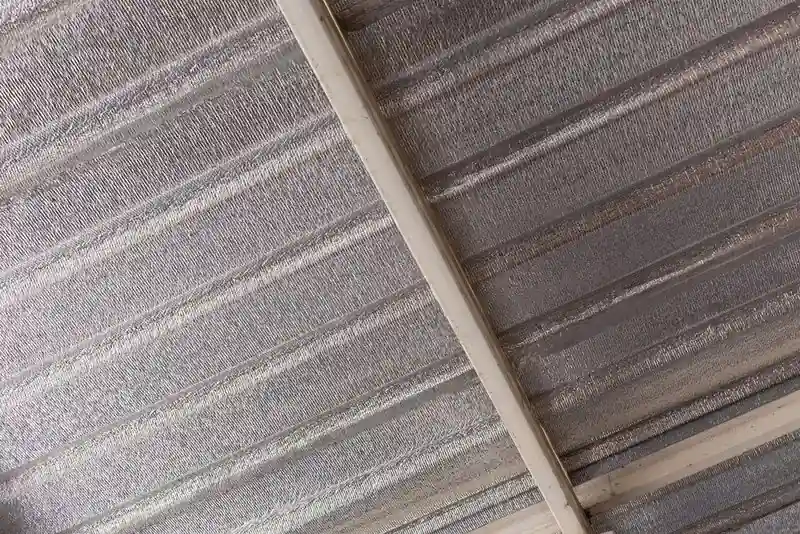
A radiant barrier is a reflective material – usually aluminum foil laminated to a substrate – installed on the underside of the roof deck. It reflects radiant heat from the sun back toward the roof instead of letting it pass into your attic. In DFW summers, attic temperatures can hit 150 degrees. With a radiant barrier, that drops to 120 or lower. That means your air conditioner runs less. The U.S. Department of Energy says radiant barriers can reduce cooling costs by 5 to 10 percent in warm climates. That might not sound like a lot, but in a 2,000-square-foot DFW home, that is $100 to $200 per year. The material cost for that same home is around $700 to $1,000. So you pay back the investment in three to five years. If you are already getting a new roof, the payback is even faster because you skip the labor.
Pair Radiant Barrier with Proper Attic Ventilation
Radiant barrier works best when your attic has good ventilation. That means soffit vents and ridge vents or gable vents. Hail storms often damage these vents. Plastic vents crack. Metal vents dent. Your insurance claim should include replacing those damaged vents. I recommend upgrading to metal ridge vents and tough plastic soffit vents. That way your attic gets the cross-flow it needs. The ENERGY STAR program recommends an attic ventilation ratio of 1 square foot of vent area for every 300 square feet of attic floor space. Most DFW homes do not meet that standard. If you are getting a new roof, it is the perfect time to add more vents. The roofer is already cutting into the deck for the ridge vent. The extra cost is minimal. Combine that with a radiant barrier and you have a system that keeps your attic cooler without extra mechanical equipment.
When You Should Not Add a Radiant Barrier
I will tell you when to skip it. If your roof is not being replaced, do not add a radiant barrier unless you are already replacing the decking. The labor cost is too high for a retrofit. Also, if you already have a metal roof, you do not need a radiant barrier. Metal roofs reflect radiant heat on their own. If your attic has very little insulation – say R-19 or less – fix that first. Insulation is more cost-effective. The ENERGY STAR website says attic insulation should be at least R-38 in North Texas. If you are below that, add blown-in cellulose or fiberglass before you mess with radiant barrier. Lastly, if your roof has no attic – like a flat roof with a cathedral ceiling – a radiant barrier does not apply. The barrier goes on the underside of the deck, which would be your interior ceiling. That is a different product. Stick to a cool roof coating instead.
My Opinion: One Number That Matters
I rarely give opinions. But here is one: the single biggest mistake I see DFW homeowners make is waiting until after the roof replacement to add a radiant barrier. I have seen the numbers. Retrofitting a radiant barrier on a 2,000-square-foot home costs $1,200 to $1,600 in labor and material. Doing it during a roof replacement costs $700 to $1,000 total. That is a difference of $500 to $600. That is the number that matters. If your insurance claim is already paying for the roof, you are leaving that $500 on the table. Plus you pay $100 more per summer in cooling. Over five years, that is another $500. So the total mistake is about $1,000. Do not make that mistake. Talk to your roofer and ask for radiant barrier installation before the new deck goes down.
How to Include Radiant Barrier in Your Insurance Claim
First, get a copy of your insurance adjuster's estimate. Look for line items like roof deck replacement, underlayment, and vents. Then call a roofer who understands radiant barrier. I work with several roofers in DFW who will give you a separate quote for the radiant barrier material and installation. Send that quote to your adjuster and ask for a supplemental payment for the upgrade. Some policies have a code upgrade endorsement that covers energy efficiency improvements. Even if it does not, you can pay the material cost out of pocket and save on labor. The roofer will staple the radiant barrier to the deck after the old shingles are stripped and before the new underlayment goes on. The process takes an extra hour for a 2,000-square-foot roof. That is why the labor cost is near zero. Do not wait. Once the new deck is on, you lose the chance for three to five years.
Frequently Asked Questions
Does insurance cover radiant barrier installation?
Can I add radiant barrier myself during roof replacement?
Will a radiant barrier damage my roof shingles?
How much does radiant barrier material cost for a typical DFW home?
Should I replace my attic insulation at the same time?
If you are filing an insurance claim for a new roof in DFW, call me at (469) 895-2695 to discuss adding a radiant barrier. I will look at your attic, quote the material, and coordinate with your roofer so you get the upgrade for just the material cost. Do not let this opportunity pass. If you want a straight answer on your attic, call me at (469) 895-2695. I'll inspect it with a thermal camera, tell you exactly what you need, and give you a written quote. No upsell. No pressure.
P.S. Every attic is different. The numbers above are ballpark estimates based on DFW averages. Call us at (469) 895-2695 and we'll come take a look with a thermal camera, give you a written quote, and tell you honestly if you even need anything. No upsell. No pressure.
Get a free estimate
Fill out the form and we'll get back to you within 24 hours. No pressure, no upsells.
Neal runs DFW Attic Insulation, a local crew serving the entire Dallas-Fort Worth metroplex. He started in roofing and construction over two decades ago and now specializes in attic insulation, air sealing, and ventilation. He believes in honest advice — he'll tell you if you don't need anything.